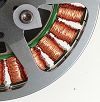
Test your motor and driver together using open-loop control. This step determines your motor’s pole pair count and validates that the driver can control your specific motor.
⚠️ Important Safety Notice
Actual current will flow through your motor and electronics
Motor may spin unexpectedly if parameters are wrong
#include<SimpleFOC.h>// TODO: instantiate your motor// TODO: instantiate your driver// instantiate the commanderCommandercommand=Commander(Serial);voiddoTarget(char*cmd){command.scalar(&motor.target,cmd);}voiddoLimit(char*cmd){command.scalar(&motor.voltage_limit,cmd);}voidsetup(){// use monitoring with serial Serial.begin(115200);// enable more verbose output for debugging// comment out if not neededSimpleFOCDebug::enable(&Serial);// driver config// power supply voltage [V]driver.voltage_power_supply=TODO://set your power supply voltage;// limit the maximal dc voltage the driver can setdriver.voltage_limit=TODO://set your voltage limit; Usually half of power supply voltage is a good starting pointif(!driver.init()){Serial.println("Driver init failed!");return;}// link the motor and the drivermotor.linkDriver(&driver);// limiting motor movements// start very low for high resistance motors// current = voltage / resistance, so try to be well under 1Ampmotor.voltage_limit=TODO://set your voltage limit; // [V]// open loop control configmotor.controller=MotionControlType::velocity_openloop;// init motor hardwareif(!motor.init()){Serial.println("Motor init failed!");return;}// set the target velocity [rad/s]motor.target=6.28;// one rotation per second// add target command Tcommand.add('T',doTarget,"target velocity");command.add('L',doLimit,"voltage limit");Serial.println("Motor ready!");Serial.println("Set target velocity [rad/s]");_delay(1000);}voidloop(){// loop FOC algorithm, should be called as // frequently as possible for best // performance (e.g. 1kHz+)motor.loopFOC();// open loop velocity movementmotor.move();// user communicationcommand.run();}
#include<SimpleFOC.h>// BLDCMotor(pole pair number);BLDCMotormotor=BLDCMotor(TODO);// BLDCDriver3PWM(pwmA, pwmB, pwmC, Enable(optional));BLDCDriver3PWMdriver=BLDCDriver3PWM(TODO,TODO,TODO,TODO);// set your pins// instantiate the commanderCommandercommand=Commander(Serial);voiddoTarget(char*cmd){command.scalar(&motor.target,cmd);}voiddoLimit(char*cmd){command.scalar(&motor.voltage_limit,cmd);}voidsetup(){// use monitoring with serial Serial.begin(115200);// enable more verbose output for debugging// comment out if not neededSimpleFOCDebug::enable(&Serial);// driver config// power supply voltage [V]driver.voltage_power_supply=TODO://set your power supply voltage;// limit the maximal dc voltage the driver can setdriver.voltage_limit=TODO://set your voltage limit; Usually half of power supply voltage is a good if(!driver.init()){Serial.println("Driver init failed!");return;}// link the motor and the drivermotor.linkDriver(&driver);// limiting motor movements// start very low for high resistance motors// current = voltage / resistance, so try to be well under 1Ampmotor.voltage_limit=TODO://set your voltage limit in volts; // [V]// open loop control configmotor.controller=MotionControlType::velocity_openloop;// init motor hardwareif(!motor.init()){Serial.println("Motor init failed!");return;}// set the target velocity [rad/s]motor.target=6.28;// one rotation per second// add target command Tcommand.add('T',doTarget,"target velocity");command.add('L',doLimit,"voltage limit");Serial.println("Motor ready!");Serial.println("Set target velocity [rad/s]");_delay(1000);}voidloop(){// loop FOC algorithm, should be called as // frequently as possible for best // performance (e.g. 1kHz+)motor.loopFOC();// open loop velocity movementmotor.move();// user communicationcommand.run();}
#include<SimpleFOC.h>// BLDCMotor(pole pair number);BLDCMotormotor=BLDCMotor(TODO);// BLDCDriver6PWM(pwmAh, pwmAl, pwmBh, pwmBl, pwmCh, pwmCl, (en optional))BLDCDriver6PWMdriver=BLDCDriver6PWM(TODO,TODO,TODO,TODO,TODO,TODO,TODO);// set your pins// instantiate the commanderCommandercommand=Commander(Serial);voiddoTarget(char*cmd){command.scalar(&motor.target,cmd);}voiddoLimit(char*cmd){command.scalar(&motor.voltage_limit,cmd);}voidsetup(){// use monitoring with serial Serial.begin(115200);// enable more verbose output for debugging// comment out if not neededSimpleFOCDebug::enable(&Serial);// driver config// power supply voltage [V]driver.voltage_power_supply=TODO://set your power supply voltage;// limit the maximal dc voltage the driver can setdriver.voltage_limit=TODO://set your voltage limit; Usually half of power supply voltage is a good if(!driver.init()){Serial.println("Driver init failed!");return;}// link the motor and the drivermotor.linkDriver(&driver);// limiting motor movements// start very low for high resistance motors// current = voltage / resistance, so try to be well under 1Ampmotor.voltage_limit=TODO://set your voltage limit in volts; // [V]// open loop control configmotor.controller=MotionControlType::velocity_openloop;// init motor hardwareif(!motor.init()){Serial.println("Motor init failed!");return;}// set the target velocity [rad/s]motor.target=6.28;// one rotation per second// add target command Tcommand.add('T',doTarget,"target velocity");command.add('L',doLimit,"voltage limit");Serial.println("Motor ready!");Serial.println("Set target velocity [rad/s]");_delay(1000);}voidloop(){// loop FOC algorithm, should be called as // frequently as possible for best // performance (e.g. 1kHz+)motor.loopFOC();// open loop velocity movementmotor.move();// user communicationcommand.run();}
#include<SimpleFOC.h>// StepperMotor(pole pair number);StepperMotormotor=StepperMotor(TODO);// StepperDriver2PWM(pwm1, dir1, pwm2, dir2,(en1, en2 optional))StepperDriver2PWMdriver=StepperDriver2PWM(TODO,TODO,TODO,TODO);// set your pins// instantiate the commanderCommandercommand=Commander(Serial);voiddoTarget(char*cmd){command.scalar(&motor.target,cmd);}voiddoLimit(char*cmd){command.scalar(&motor.voltage_limit,cmd);}voidsetup(){// use monitoring with serial Serial.begin(115200);// enable more verbose output for debugging// comment out if not neededSimpleFOCDebug::enable(&Serial);// driver config// power supply voltage [V]driver.voltage_power_supply=TODO://set your power supply voltage;// limit the maximal dc voltage the driver can setdriver.voltage_limit=TODO://set your voltage limit; Usually half of power supply voltage is a good if(!driver.init()){Serial.println("Driver init failed!");return;}// link the motor and the drivermotor.linkDriver(&driver);// limiting motor movements// start very low for high resistance motors// current = voltage / resistance, so try to be well under 1Ampmotor.voltage_limit=TODO://set your voltage limit in volts; // [V]// open loop control configmotor.controller=MotionControlType::velocity_openloop;// init motor hardwareif(!motor.init()){Serial.println("Motor init failed!");return;}// set the target velocity [rad/s]motor.target=6.28;// one rotation per second// add target command Tcommand.add('T',doTarget,"target velocity");command.add('L',doLimit,"voltage limit");Serial.println("Motor ready!");Serial.println("Set target velocity [rad/s]");_delay(1000);}voidloop(){// loop FOC algorithm, should be called as // frequently as possible for best // performance (e.g. 1kHz+)motor.loopFOC();// open loop velocity movementmotor.move();// user communicationcommand.run();}
#include<SimpleFOC.h>// StepperMotor(pole pair number);StepperMotormotor=StepperMotor(TODO);// StepperDriver4PWM(ph1A, ph1B, ph2A, ph2B, (en1, en2 optional))StepperDriver4PWMdriver=StepperDriver4PWM(TODO,TODO,TODO,TODO,TODO,TODO);// set your pins// instantiate the commanderCommandercommand=Commander(Serial);voiddoTarget(char*cmd){command.scalar(&motor.target,cmd);}voiddoLimit(char*cmd){command.scalar(&motor.voltage_limit,cmd);}voidsetup(){// use monitoring with serial Serial.begin(115200);// enable more verbose output for debugging// comment out if not neededSimpleFOCDebug::enable(&Serial);// driver config// power supply voltage [V]driver.voltage_power_supply=TODO://set your power supply voltage;// limit the maximal dc voltage the driver can setdriver.voltage_limit=TODO://set your voltage limit; Usually half of power supply voltage is a good if(!driver.init()){Serial.println("Driver init failed!");return;}// link the motor and the drivermotor.linkDriver(&driver);// limiting motor movements// start very low for high resistance motors// current = voltage / resistance, so try to be well under 1Ampmotor.voltage_limit=TODO://set your voltage limit in volts; // [V]// open loop control configmotor.controller=MotionControlType::velocity_openloop;// init motor hardwareif(!motor.init()){Serial.println("Motor init failed!");return;}// set the target velocity [rad/s]motor.target=6.28;// one rotation per second// add target command Tcommand.add('T',doTarget,"target velocity");command.add('L',doLimit,"voltage limit");Serial.println("Motor ready!");Serial.println("Set target velocity [rad/s]");_delay(1000);}voidloop(){// loop FOC algorithm, should be called as // frequently as possible for best // performance (e.g. 1kHz+)motor.loopFOC();// open loop velocity movementmotor.move();// user communicationcommand.run();}
#include<SimpleFOC.h>// StepperMotor(pole pair number);HybridStepperMotormotor=HybridStepperMotor(TODO);// BLDCDriver3PWM(pwmA, pwmB, pwmC, Enable(optional));BLDCDriver3PWMdriver=BLDCDriver3PWM(TODO,TODOTODO,TODO);// set your pins// instantiate the commanderCommandercommand=Commander(Serial);voiddoTarget(char*cmd){command.scalar(&motor.target,cmd);}voiddoLimit(char*cmd){command.scalar(&motor.voltage_limit,cmd);}voidsetup(){// use monitoring with serial Serial.begin(115200);// enable more verbose output for debugging// comment out if not neededSimpleFOCDebug::enable(&Serial);// driver config// power supply voltage [V]driver.voltage_power_supply=TODO://set your power supply voltage;// limit the maximal dc voltage the driver can setdriver.voltage_limit=TODO://set your voltage limit; Usually half of power supply voltage is a good if(!driver.init()){Serial.println("Driver init failed!");return;}// link the motor and the drivermotor.linkDriver(&driver);// limiting motor movements// start very low for high resistance motors// current = voltage / resistance, so try to be well under 1Ampmotor.voltage_limit=TODO://set your voltage limit in volts; // [V]// open loop control configmotor.controller=MotionControlType::velocity_openloop;// init motor hardwareif(!motor.init()){Serial.println("Motor init failed!");return;}// set the target velocity [rad/s]motor.target=6.28;// one rotation per second// add target command Tcommand.add('T',doTarget,"target velocity");command.add('L',doLimit,"voltage limit");Serial.println("Motor ready!");Serial.println("Set target velocity [rad/s]");_delay(1000);}voidloop(){// loop FOC algorithm, should be called as // frequently as possible for best // performance (e.g. 1kHz+)motor.loopFOC();// open loop velocity movementmotor.move();// user communicationcommand.run();}
#include<SimpleFOC.h>// HybridStepperMotor(pole pair number);HybridStepperMotormotor=HybridStepperMotor(TODO);// BLDCDriver6PWM(pwmAh, pwmAl, pwmBh, pwmBl, pwmCh, pwmCl, (en optional))BLDCDriver6PWMdriver=BLDCDriver6PWM(TODO,TODO,TODO,TODO,TODO,TODO,TODO);// set your pins// instantiate the commanderCommandercommand=Commander(Serial);voiddoTarget(char*cmd){command.scalar(&motor.target,cmd);}voiddoLimit(char*cmd){command.scalar(&motor.voltage_limit,cmd);}voidsetup(){// use monitoring with serial Serial.begin(115200);// enable more verbose output for debugging// comment out if not neededSimpleFOCDebug::enable(&Serial);// driver config// power supply voltage [V]driver.voltage_power_supply=TODO://set your power supply voltage;// limit the maximal dc voltage the driver can setdriver.voltage_limit=TODO://set your voltage limit; Usually half of power supply voltage is a good if(!driver.init()){Serial.println("Driver init failed!");return;}// link the motor and the drivermotor.linkDriver(&driver);// limiting motor movements// start very low for high resistance motors// current = voltage / resistance, so try to be well under 1Ampmotor.voltage_limit=TODO://set your voltage limit in volts; // [V]// open loop control configmotor.controller=MotionControlType::velocity_openloop;// init motor hardwareif(!motor.init()){Serial.println("Motor init failed!");return;}// set the target velocity [rad/s]motor.target=6.28;// one rotation per second// add target command Tcommand.add('T',doTarget,"target velocity");command.add('L',doLimit,"voltage limit");Serial.println("Motor ready!");Serial.println("Set target velocity [rad/s]");_delay(1000);}voidloop(){// loop FOC algorithm, should be called as // frequently as possible for best // performance (e.g. 1kHz+)motor.loopFOC();// open loop velocity movementmotor.move();// user communicationcommand.run();}
Setup Steps
Copy the code: Find your motor + driver combination above and copy the code into a new Arduino sketch
Update parameters:
Implement the TODOs in the code:
Pin numbers (PWM pins, enable pin, direction pins)
Power supply voltage
Pole pair count - start with a guess from your motor datasheet
Voltage limit (see guidance below)
Upload and open Serial Monitor (115200 baud)
Voltage Limit Guide
The motor.voltage_limit directly determines current: current = voltage / phase_resistance
For gimbal motors (high resistance ~10Ω)
Examples work well with motor.voltage_limit = 3-5V
These motors are low-power and safe
For higher power motors
Find phase resistance from datasheet or measure it
Set limit to keep current below 2A: motor.voltage_limit = 2 * phase_resistance
Better yet: set motor.phase_resistance in code, then use motor.current_limit instead
If you don’t know phase resistance
Start very conservatively: motor.voltage_limit = 0.5V
Slowly increase if motor doesn’t spin
Testing
✓ What to expect
See Motor ready! in serial terminal (not Motor init failed!)
Motor spins once you set a target velocity
In serial terminal, type T6.28 to set target to one rotation/sec
Motor should spin at exactly 1 rotation per second
If it spins faster/slower, your pole pair count is wrong
Finding Correct Pole Pair Count
This is why this test is valuable! If your motor doesn’t spin at exactly one rotation per second when you command 6.28 rad/s:
Motor spins too slowly? → Try a lower pole pair number
Motor spins too fast? → Try a higher pole pair number
Adjust and test until exactly 1 rotation = T6.28 command
Once you find the right pole pair number, note it for the next step!
Troubleshooting
Motor doesn’t spin?
Check initialization messages in serial terminal
Verify pole pair number is reasonable (usually 2-15)
Increase motor.voltage_limit gradually (start at 1V)
Check motor is mechanically free to spin
Motor spins but is noisy/unstable?
Check the motor connection to the driver - are all phases connected correctly?
Is driver entering fault state - maybe the current is too high? Try lowering motor.voltage_limit
Check that your power supply can provide enough current for the motor - is it limiting current and causing voltage drop?
Current too high?
Reduce motor.voltage_limit
Verify you’re using right motor type (BLDC vs Stepper)
Check phase resistance of your motor
Next Step
Once you’ve confirmed:
✓ Motor spins smoothly
✓ Correct pole pair count found (spins 1 rotation per second at 6.28 rad/s)